The Crews
Two crews, two different ships
Cony was commissioned twice. The first crew took a brand-new destroyer, built at Bath Iron Works, into the Pacific war of 1943–45 and paid for it. The second crew inherited a rebuilt ship with a new mission — hunting submarines — and took her around the world to Korea and back into the cold-war Atlantic. Her story is theirs.
The Pacific crew, 1942–46
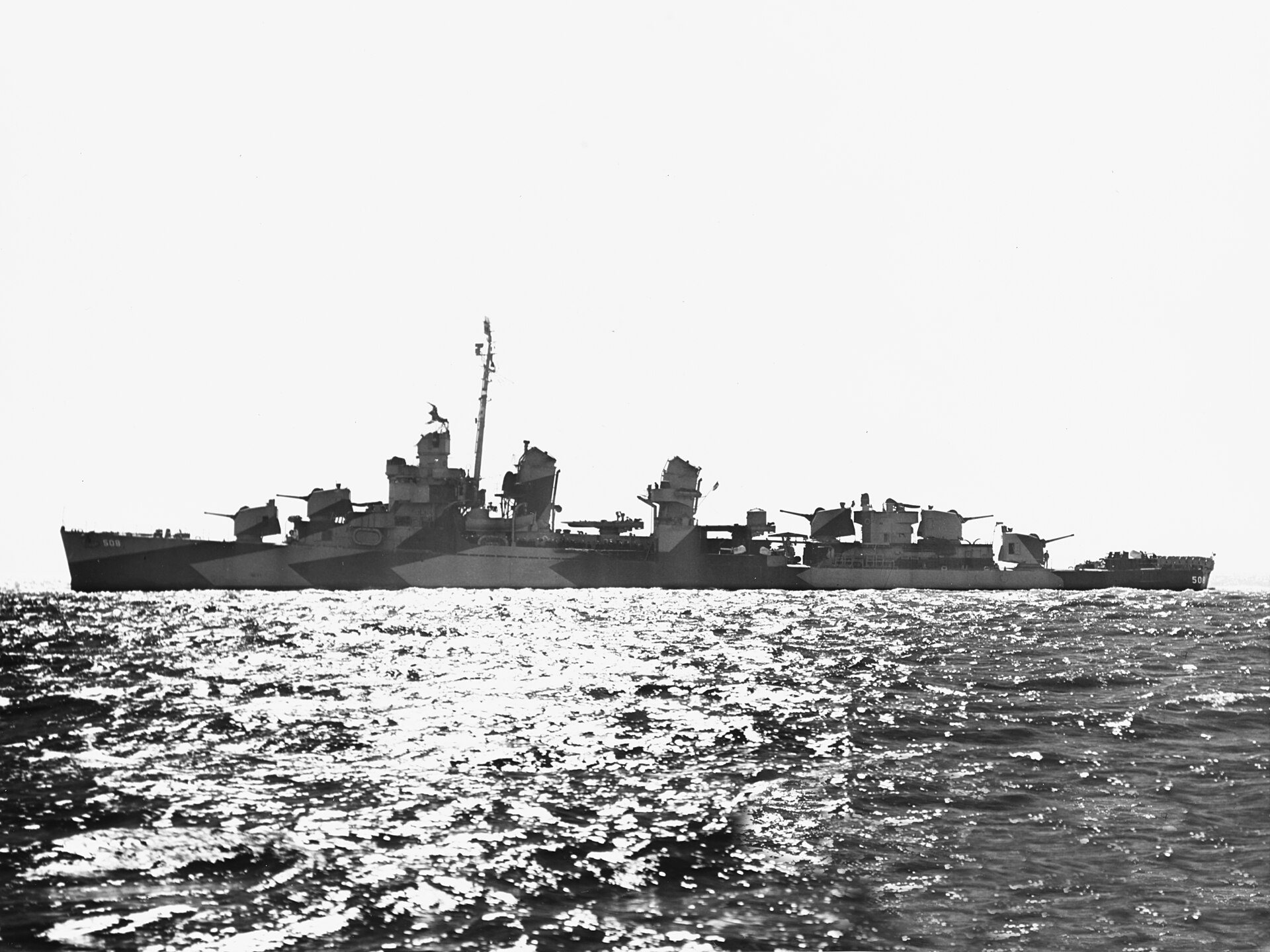
Commissioned at Boston on 30 October 1942 under Lieutenant Commander Harry D. Johnston, Cony escorted a troop convoy from Norfolk to Nouméa, New Caledonia, arriving 27 January 1943. Her first action came on 6 March 1943, the bombardment of the Vila-Stanmore area. On 15 August 1943 she served as flagship for Vice Admiral Theodore S. Wilkinson during the landings on Vella Lavella.
27 October 1943 — her costliest day
Covering the landings on the Treasury Islands, Cony and a sister destroyer came under attack from about 25 Japanese bombers. Aided by American fighters, the pair splashed 12 of the attackers — but Cony took two bomb hits on her main deck and a near miss. Eight of her men were killed and ten wounded; the ship was left heavily damaged, towed to Port Purvis for emergency repairs, then sent home to Mare Island for a complete overhaul.
The Navy's history records the count. The record also carries the names: all eight are listed in the U.S. Navy Memorial's tribute to the ship, and each is corroborated in the wartime casualty lists filed with the National Archives. They are on this site's memorial roster — with the document behind every name.
She returned to action on 27 March 1944 and finished the war the way destroyers did: screening the Saipan and Tinian landings; the Peleliu carrier screen; the Surigao Strait night battle, where she helped finish the Japanese destroyer Asagumo on the morning of 25 October 1944; the Ormoc Bay sweeps; the Lingayen Gulf landings of January 1945; and the Borneo operations of that summer. In September 1945 she stood in the Yangtze approaches, then served as Shanghai's harbor-entrance control ship into November and guided minesweeping in the Taiwan Strait before sailing for home on 20 December 1945. She reached Charleston on 13 March 1946 and was decommissioned into reserve there on 18 June 1946 — with eleven battle stars for World War II service.
The antisubmarine ship, 1949
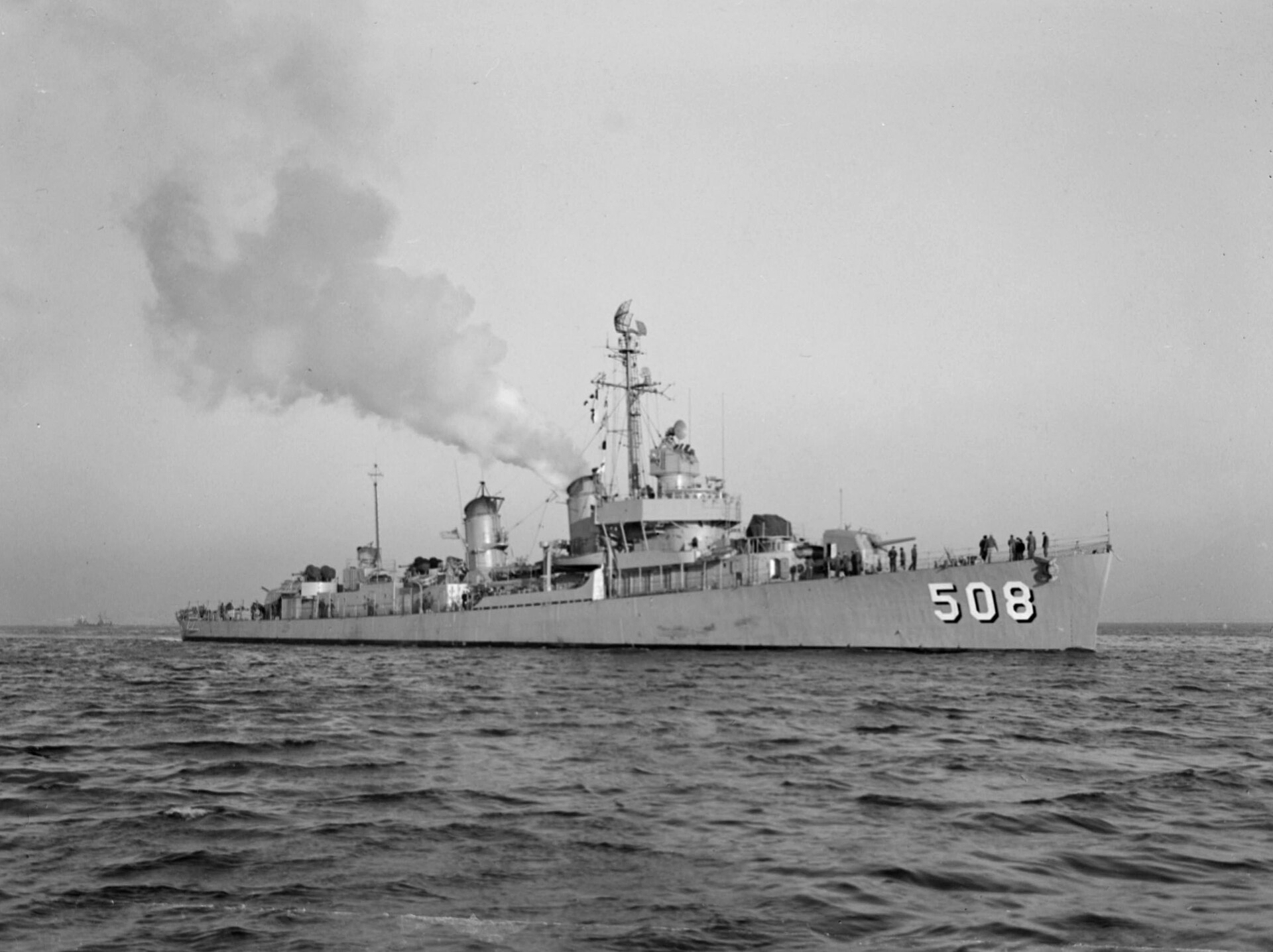
On 26 March 1949 the Navy reclassified her DDE-508 — an escort destroyer specially equipped for antisubmarine warfare — and on 17 November 1949 she was recommissioned at Boston Naval Shipyard, Commander J. A. Dodson, Jr., commanding. The ceremony's printed program, the U.S. Navy's own document preserved on this site, names Rear Admiral Hewlett Thebaud, Commandant of the First Naval District, and Captain R. M. Watt, Jr., the shipyard commander. Within four weeks she was underway — the Navy's new kind of destroyer.
Korea — by way of the world, 1951
Cony's Korean War service came as one leg of a round-the-world cruise. She sailed Norfolk on 14 May 1951, operated in the Korean war zone from 18 June through 28 October, and came home the long way — through the Suez Canal — arriving back at Norfolk on 20 December 1951. Two battle stars for Korean War service.
NATO and Task Force Alfa
In September 1953 she joined NATO's Operation Mariner, exercising with the Royal Navy off Northern Ireland before a Sixth Fleet Mediterranean tour; the Mediterranean again in 1955 and 1957; NATO antisubmarine exercises in the English Channel in September–October 1957.
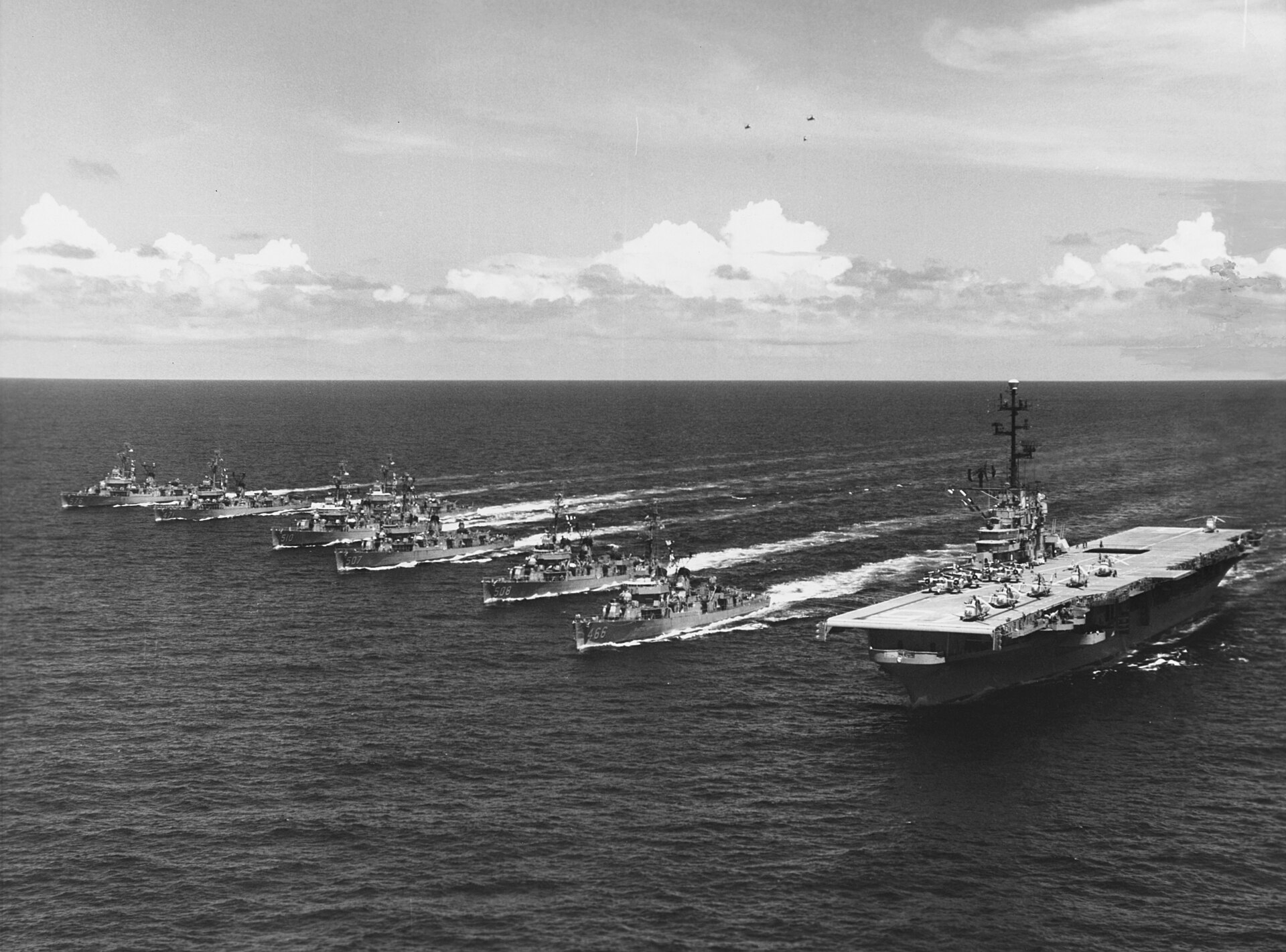
In 1959–60 she operated with Task Force Alfa, the Navy's experimental antisubmarine tactical group on the East Coast — the hunter-killer work she had been rebuilt for, done as a deliberate experiment in how to do it better. She visited Quebec City in June 1960. The Navy's published history of the ship, DANFS, ends its narrative in 1960; what follows — Cuba twice, Vietnam, and the end — is told on The Ship and October 1962.